Industrial Enclosure Hardware for the European Market
Europe buys more industrial cabinet locks than almost anywhere else — roughly a quarter to a third of the world’s total demand for enclosure hardware, depending on whose numbers you trust. Verified Market Reports pegged the global industrial lock market at around USD 4.3 billion in 2024, and Europe sits near the top of the regional pile. PW Consulting values the European cabinet lock segment alone at about USD 218 million for 2025. Germany, the UK and Italy still lead, but Poland, the Czech Republic and their CEE neighbours are catching up fast as manufacturing keeps shifting east.
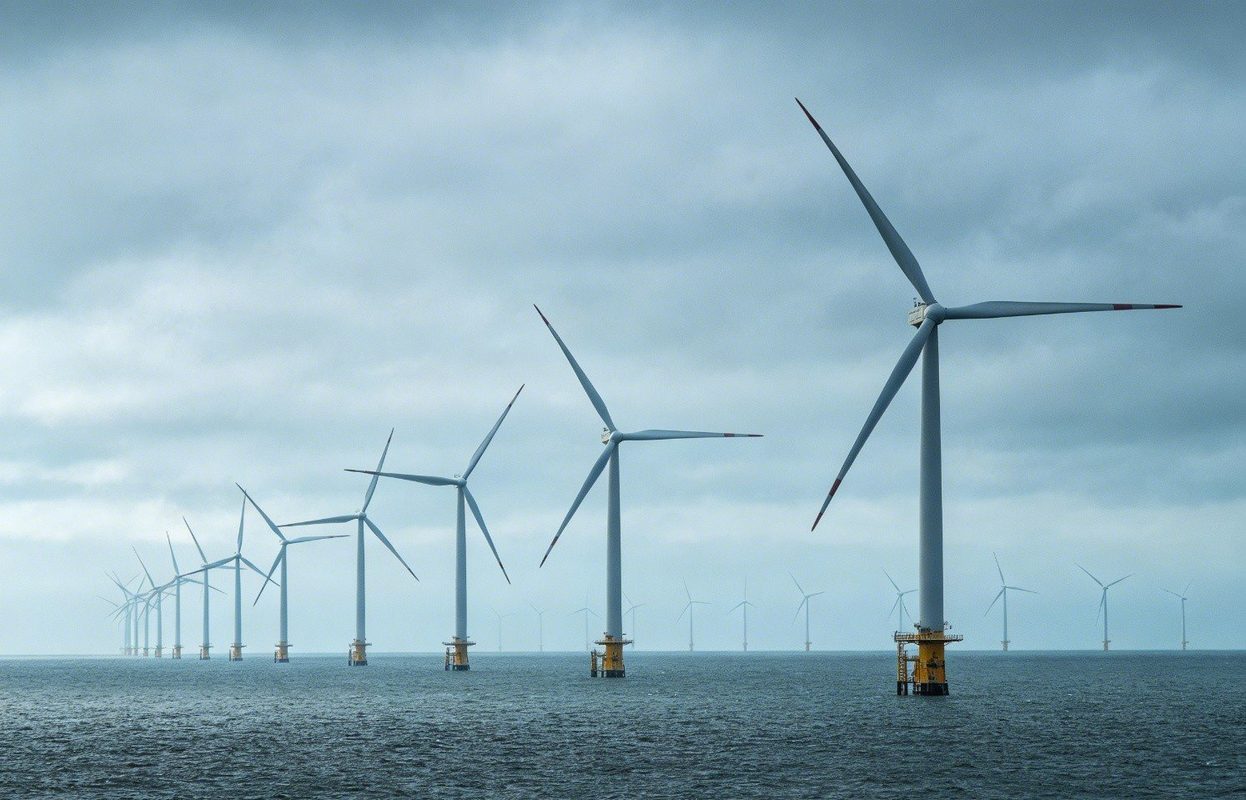
There’s a tailwind behind all this. The EU has legally committed to 550 GW of renewable capacity by 2030, and you can’t hit that number without building out roughly 200 GW of battery storage to go with it. Every megawatt of battery storage needs cabinets — for power conversion, distribution, battery management. That translates directly into demand for industrial cabinet locks, hinges and gaskets that won’t fail halfway through a twenty-year project life.
But Europe is also one of the hardest markets to get right for industrial cabinet locks. A cabinet lock that works fine in a Shanghai factory might seize up in a Norwegian winter or rust through on a Spanish coast. And then there’s the paperwork — CE, ATEX, RoHS, WEEE, CBAM. Get any of it wrong and you’re not just replacing hardware; you’re looking at failed audits, lost tenders and downtime on critical infrastructure.
Below is what we’ve learned from supplying European projects, and how we spec hardware for different corners of the continent.
Five Things That Make European Projects Different
1. The climate is not one climate
Norway and Greece might as well be on different planets when it comes to what your enclosure hardware has to survive.
- Nordic and Alpine regions (Norway, Sweden, Finland, Switzerland): winters regularly drop below -40°C. Lock grease turns solid, keys won’t turn, and hinges take a beating from constant thermal cycling.
- Mediterranean coasts (Spain, Italy, Greece, southern France): heat, humidity and salt spray. Standard plated locks can show rust in 3–6 months; we’ve seen cylinder seizure rates above 30% within a year on untreated hardware.
- Central & Eastern Europe (Germany, Poland, Czechia): daily temperature swings can exceed 25°C, which ages gaskets faster than most people expect — eventually the waterproofing just cracks.
- North Sea & Baltic coasts (UK, Netherlands, Denmark): year-round maritime humidity mixed with industrial air pollution. Corrosion happens faster here than almost anywhere else.
The practical problem isn’t the lock itself failing — it’s what happens when a technician can’t get a cabinet door open for scheduled maintenance. Missed switchgear inspections, dropped telecom signals, higher call-out costs. It adds up.
2. Compliance is the entry ticket, not a nice-to-have
European buyers don’t ask “do you have certifications?” — they ask for the documentation before they’ll even quote a project for enclosure hardware. The main ones:
- CE marking: mandatory for anything sold into the EU. Industrial cabinet locks and cabinet hardware typically fall under the Machinery Directive (2006/42/EC) and Low Voltage Directive (2014/35/EU).Technical files need to be ready for customs at any time.
- RoHS & WEEE: restricts hazardous substances and governs e-waste handling. Pushes everyone toward recyclable materials and designs that come apart easily.
- ATEX (2014/34/EU): for any cabinet going into an explosive atmosphere — oil & gas, chemical plants, mining. Locks, hinges and gaskets all need to meet it.
- CBAM: mostly aimed at raw materials right now, but project developers are already asking hardware suppliers for carbon footprint documentation. It’ll only get stricter.
If you’re a smaller cabinet builder trying to break into Europe, this can feel overwhelming. The short version: work with a hardware supplier that already has the quality system in place. Reaking holds ISO9001, RoHS, salt-spray, waterproof and classification society certifications, and we build out the compliance documentation as part of the project — not as an afterthought.
3. Storage and renewables are rewriting the spec sheet
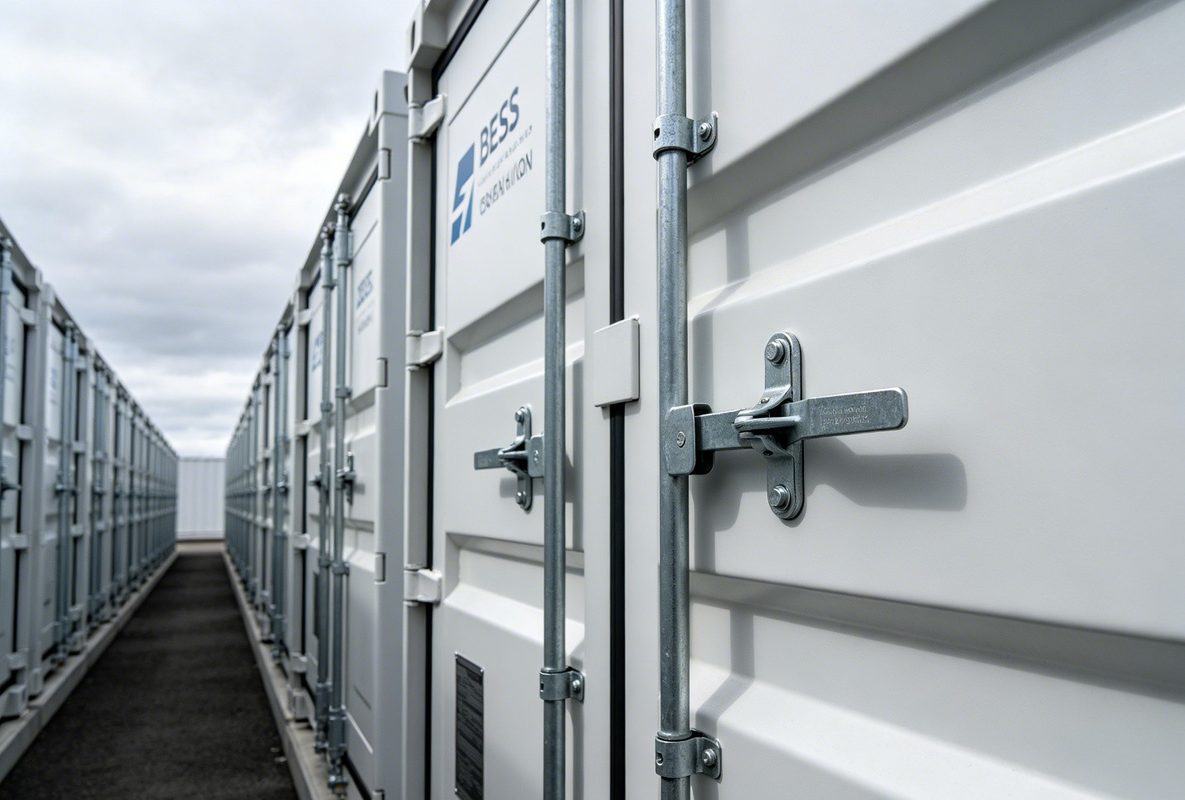
Italy is a good example of what’s happening across Europe’s renewable energy push. Demand for cabinet hardware there has shifted noticeably toward utility-scale battery storage (BESS) and grid-balancing stations — these now account for 55–65% of total enclosure hardware demand in the country.
Large storage cabinets change the spec in ways that aren’t always obvious:
- Doors over 2 metres tall need multi-point rod locking to stay sealed over thousands of open-close cycles. A single-point latch just won’t hold.
- Those same doors are heavy. Gas springs aren’t a luxury — they’re what lets one technician open the door safely without a second person.
- Outdoor storage means gaskets have to do four jobs at once: waterproof, dust-proof, weather-resistant and flame-retardant.
- Transport vibration and thermal cycling will expose any weakness in hinge or lock construction. We test for both.
As Chinese storage integrators push into Europe, the question has stopped being “can you build it” and become “will it still be working in 2035?”
4. The retrofit market is bigger than people realise
Europe has a lot of ageing industrial equipment — and the first wave of renewable energy installations is now old enough to need upgrades, including replacement industrial cabinet locks and hinges. Safety standards have tightened, power densities have gone up, and a huge number of existing cabinets need new locks, hinges and gaskets just to meet current codes.
This segment doesn’t get the headlines, but it has two things going for it: low customer acquisition cost (the buyer already knows your brand) and predictable demand. It’s worth building into any European growth plan.
5. Smart cabinets are coming — slowly, then all at once
BIM-ready product data, digital twin integration and automated configurators are becoming baseline requirements for larger European tenders. Smart cabinets with temperature sensors, humidity detectors and door-position switches are already standard in new data centres and critical infrastructure builds.
Overall penetration is still low, but the curve is steep. Reaking already offers locks with integrated door-position switch contacts that plug directly into cabinet monitoring systems — so if you’re bidding on a smart project, we’re not starting from zero.
What Reaking Supplies for European Projects
We’re based in Shengzhou, Zhejiang — a factory, not a trading company. We do our own R&D, die-casting, stamping and stainless steel processing in-house for industrial cabinet locks and enclosure hardware. For European conditions we typically spec from these ranges:
- Data centre server cabinets: corrosion-resistant swing handles, compression latches and EPDM gaskets rated to EN 60529 IP levels. Built for high-density deployments from Frankfurt to Helsinki.
- Outdoor power & telecom cabinets: reinforced surface finishes specifically tuned for coastal salt spray, high humidity and extreme cold. CE-compliant.
- Renewable energy storage cabinets: multi-point rod locks, heavy-duty hinges, gas spring supports and weather-sealed gaskets — the full package for large BESS projects.
- General industrial cabinets: cost-effective lines that balance performance and budget, popular with price-sensitive buyers in Eastern Europe.
- RV & marine: vibration-resistant, salt-spray-tolerant locking. Our 316 stainless range is the go-to for high-humidity marine and mobile transport applications.
Want to see how it’s made? Our factory and company page walks through the production lines. Common buyer questions are covered on the FAQ page.
Material & IP Rating Recommendations by Region
| Region / Condition | Material Recommendation | IP Rating | Notes |
|---|---|---|---|
| Coastal salt spray (Mediterranean, North Sea, English Channel) | 316 stainless steel + heavy anti-corrosion treatment | IP65+ EPDM gasket | Non-negotiable within 5 km of coast |
| Cold regions (Nordic, Alps) | Low-temp grease + freeze-resistant materials | IP54+ | Validated to -40°C |
| Inland general industrial | Zinc alloy with enhanced anti-rust coating | IP54 | Best balance of cost and durability |
| Explosive environments (oil & gas, chemical) | ATEX-compliant spec on request | Per zone | Covers Zones 1, 2, 21, 22 |
Not every job needs stainless steel. For indoor, low-corrosion environments, a well-surface-treated die-cast zinc alloy or stamped galvanized steel will give you stable performance at a lower price point. IP test reports, material certificates and compliance documents are all available on request — just ask your sales engineer.
Why European Buyers Work With Reaking
- Source factory. Source factory for industrial cabinet locks. Die-casting, stamping, stainless processing and packaging all under one roof in Shengzhou. No middleman markup, no communication gap between engineering and production.
- Full material range. Full material range for enclosure hardware. Die-cast zinc alloy, stamped galvanized steel, SS304 and SS316 — covering cylinder locks, handle locks, panel locks, rod control locks and everything in between.
- European compliance built in. Full range meets RoHS 2011/65/EU. We provide Material Composition Declarations, SVHC declarations, IP test reports, salt-spray reports and whatever else your CE assessment needs. ATEX technical support available for explosion-proof projects.
- One-stop supply. Locks, handles, hinges and gaskets from a single PO — consistent materials and finishes across the whole package.
- Flexible on customisation. Non-standard cutouts, bolt projections, finishes and materials, with MOQs that don’t punish smaller projects.
- Tested in harsh conditions. Stainless versions pass 500+ hours of salt-spray testing; the full range is thermally cycled from -40°C to +80°C.
- Credentials. 5,000 m² factory, Zhejiang High-Tech Enterprise, ISO9001, ABS/DNV/LR/CCS classification society certifications.
Questions European Buyers Ask Most
Q: What exactly do you manufacture?
Industrial enclosure hardware — cabinet locks, hinges, handles, latches and gaskets. They go into power distribution cabinets, telecom enclosures, control boxes, storage cabinets and EV charging stations.
Q: Do your products meet European compliance requirements?
Yes. We supply CE- and RoHS-compliant products according to project needs. For explosion-proof applications we offer ATEX technical support and matching solutions.
Q: Will your locks actually work in a Nordic winter?
They will. Our handle locks, rod control locks and cylinder locks are available with special low-temperature grease rated from -40°C to +80°C. Stainless steel has no low-temperature brittleness issue, and zinc alloy performs well in cold too. All validated through thermal cycling. One practical tip: keep ice and snow from packing directly into the lock cylinder — even the best lock can’t fight physics.
Q: Can you supply a complete cabinet hardware package?
That’s actually how most of our European customers buy. Locks + handles + hinges + gaskets in one PO, all with consistent materials and surface finishes (painting, plating, stainless brushed or mirror — your choice). Fewer suppliers to manage, fewer compatibility headaches.
Q: Can you provide EN 60529 IP test reports?
Yes — IP rating reports and material certificates on formal request.
Q: What are lead times?
Standard products typically ship in 3–4 weeks. Custom projects depend on the spec, but we’ll give you a firm date before you place the order.
Q: Do you offer samples?
We do. Sample support is available for European engineering projects — contact our engineering sales team and we’ll sort out the details.
Not sure which material or IP rating fits your climate? Browse our application guides for cabinet hardware selection tips across telecom, data center and new energy projects.
Looking for solutions in other regions? See our hardware programs for North America, Southeast Asia, and the Middle East.
Ready to Spec Hardware for Your European Project?
If you’re sourcing industrial cabinet locks and enclosure hardware for European infrastructure — data centres, battery storage plants, telecom base stations or industrial power distribution — talk to our engineering sales team.We’ll give you material recommendations, a quotation and sample support. We reply to every inquiry within 24 hours.