

North American Industrial Lock Solutions Designed for Harsh Environments
North America is one of the world’s largest regional markets for industrial locks, with stringent requirements for product safety and compliance. Opportunities here come hand in hand with multiple real-world challenges.
From the Canadian tundra to the salt-spray coasts of the Gulf of Mexico, from the Great Lakes industrial corridor to the data center clusters on the West Coast, complex and diverse climatic conditions and strict safety compliance requirements are the two core factors that purchasers of industrial cabinet locks in North America must contend with.
According to WiseGuy Reports, the global industrial lock market was valued at approximately USD 3.27 billion in 2024, with North America accounting for 35–38% of the global market share — making it the largest regional market worldwide. For cabinet manufacturers, electrical equipment integrators, and facility maintenance service providers, an incorrect lock selection is not just a simple replacement cost — it can lead to equipment downtime, failure to pass project inspections, and even loss of bidding opportunities.
This article is grounded in real factory application scenarios, analyzes the genuine demands of the North American market, and provides actionable product selection recommendations.
I. Four Core Challenges to Overcome for North American Project Deployment
Based on our ongoing research into North American end-customers and engineering projects, the following four pain points frequently arise during the procurement of industrial cabinet locks:
Pain Point 1: Climate Corrosion — A Long-term Hazard for Outdoor Cabinets
North America experiences vastly different climatic conditions across regions, imposing severe tests on lock hardware:
- Coastal areas (Florida, California, Gulf of Mexico): High humidity + salt-spray environments. Ordinary plated locks develop rust spots within 3–6 months, and the lock cylinder jamming failure rate exceeds 30% within one year.
- Northern frigid regions (Canada, Great Lakes area): Winter outdoor temperatures can drop to -40°C, causing ice formation inside the lock and grease solidification, making key operation difficult.
- Regions with extreme temperature swings (Midwest, Texas): Daily temperature differences can exceed 25°C, accelerating thermal expansion and contraction that cracks sealing strips and compromises waterproof performance.
Corrosion, freezing, and component aging lead to lock cylinder seizure, handle breakage, and seal failure. When cabinet doors cannot be opened for maintenance, it can disrupt base station signals, delay power distribution panel inspections, and significantly increase overall maintenance costs.
Note: Not every application requires stainless steel. For indoor, low-corrosion environments, properly surface-treated die-cast zinc alloy and stamped galvanized steel can also provide stable performance.
Pain Point 2: Compliance Certification — The Entry Barrier for Project Bidding
North American engineering projects have clear performance standard requirements for cabinet locks. ANSI/BHMA A156.11 is the dedicated standard for cabinet locks in North America, classifying products into Grade 1 (highest), Grade 2, and Grade 3 security and durability levels. Most industrial project tenders explicitly require that locks meet at least ANSI/BHMA Grade 2. Meeting the performance criteria of this standard is a prerequisite for being included in many approved supplier lists.
Locks that lack the required performance certifications will be excluded from qualified supplier lists, losing eligibility for project bidding.
Additional note: Complete cabinets typically undergo UL50 / UL508A overall certification. As a component, the lock itself generally does not require a separate UL listing; it is validated as part of the complete cabinet testing.
Pain Point 3: Installation Dimension Deviations — On-site Rework Causes Project Delays
Different brands and batches of cabinets have variations in door thickness, cutout diameter, bolt projection length, and handle center distance. Procurement of locks frequently encounters the following issues:
- Insufficient bolt projection length – door cannot close or latch properly.
- Handle center distance does not match the pre-drilled holes on the cabinet.
- Panel lock cutout dimensions are incompatible, requiring on-site enlargement – adding more than 30 minutes of extra labor per unit.
These issues ultimately result in project delivery delays, increased labor costs, and low on-site installation efficiency.
Pain Point 4: Fragmented Hardware Procurement — Inefficiency and Inconsistent Appearance
Many suppliers offer only single lock products and cannot supply matching handles, hinges, sealing strips, and other peripheral hardware. North American buyers often have to:
- Coordinate with 3–5 different suppliers for separate orders.
- Handle multiple shipments, customs clearance, and staggered deliveries – increasing supply chain management costs.
- Deal with different surface finishing processes from different manufacturers, resulting in noticeable color variations on panel surfaces and compromised overall equipment appearance.
This directly extends the total procurement cycle by more than 30% and diminishes the overall aesthetic quality of the equipment.
II. Reaking’s Targeted Solutions
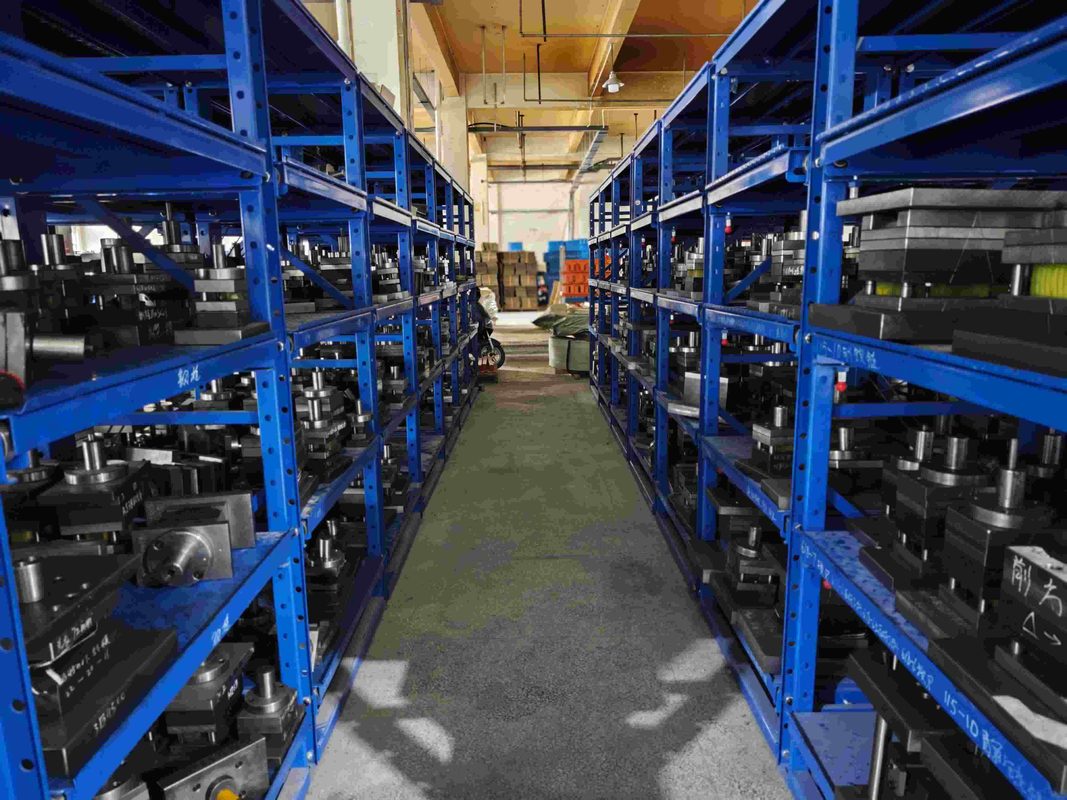
Addressing the above market pain points, Reaking provides a comprehensive range of industrial cabinet locks and supporting hardware solutions across multiple base materials. With our in-house die-casting workshop, stamping workshop, and stainless steel processing line, we offer die-cast zinc alloy, stamped galvanized steel, and SS304/SS316 stainless steel options – balancing cost and environmental durability, covering everything from standard cabinets to demanding outdoor applications.
Product Portfolio Overview
| Product Category | Primary Application | Typical Scenarios |
|---|---|---|
| Cylinder Locks | Panel locking, fits standard cutouts | Electrical cabinets, distribution boxes, telecom cabinets |
| Handle Locks | Integrated handle and locking, easy operation | Industrial control cabinets, large cabinet doors |
| Panel Locks / RV Locks | Panel-mounted, anti-theft and tamper-resistant | Electrical cabinets, communication equipment, RV equipment |
| Plane Locks | Flush surface, combines appearance and protection | Precision equipment cabinets, indoor cabinets |
| Rod Control Locks | Multi-point locking, high sealing and security | Large cabinet doors, industrial facility doors |
| Handles | Door opening/closing operation | Matching all series of cabinets |
| Hinges | Door load-bearing and rotation | Matching all series of cabinets |
| Sealing Strips | Dust and water sealing | Outdoor and harsh-environment cabinets |
Pain Point – Solution Mapping
| Customer Pain Point | Corresponding Solution | Relevant Products |
|---|---|---|
| Salt-spray corrosion, humid coastal environments | SS316 stainless steel; IP65 for general coastal salt-spray; IP67 where short-term immersion or flooding risk exists; third-party test report for ≥500h salt spray per ASTM B117 | Stainless steel cylinder locks, panel locks, weather-resistant sealing strips |
| Ordinary indoor, low-corrosion factory environments | Die-cast zinc alloy / stamped galvanized steel with powder coating, plating, etc. for cost-effective performance | Zinc alloy cylinder locks, plane locks, stamped handles and hinges |
| Extreme cold – lock seizure | Special low-temperature grease for -40°C to +80°C; stainless steel avoids low-temperature brittleness; zinc alloy/carbon steel versions also available with low-temp grease customization | Handle locks, rod control locks, cylinder locks (custom grease available) |
| ANSI/BHMA compliance barrier | Products designed and developed to ANSI/BHMA A156.11 Grade 2; performance verification available for all base materials; third-party test reports provided | Grade 2 cylinder locks, rod control locks |
| Dimension mismatch, installation difficulties | Complete 2D/3D technical drawings available for download; non-standard customization for cutouts, bolt length, handle spacing, etc.; custom options for die-casting, stamping, and stainless steel | All series support customization |
| Fragmented hardware procurement | One-stop solution: locks + handles + hinges + sealing strips; uniform surface finish across same series; flexible material selection | Full combination solutions |
Note: For low-temperature applications, external protection of the lock is still recommended to minimize direct ingress of ice and snow into the lock chamber, further extending service life.
III. Quick Selection Guide
Based on actual operating conditions and budget, follow these three steps to quickly match the right product:
Step 1: Confirm Installation Environment – Match Material and Ingress Protection (IP) Rating
| Environment Type | Recommended Material | Recommended IP Rating | Recommended Product Direction |
|---|---|---|---|
| Indoor data center / factory (low corrosion) | Die-cast zinc alloy / stamped galvanized steel / SS304 stainless | IP54 | Cylinder locks, plane locks |
| General outdoor cabinet (no heavy salt-spray) | Die-cast zinc alloy (quality coating) / SS304 stainless | IP65 | Panel locks, handle locks with sealing strips |
| Coastal / high salt-spray / chemical areas | SS316 stainless | IP65 (general); IP67 (if short-term immersion risk) | Full stainless steel series + weather-resistant sealing strips |
| Extreme cold (below -20°C) | Die-cast zinc alloy / SS304 / SS316 stainless with low-temperature grease | IP65 or above | Rod control locks, handle locks, cylinder locks (custom low-temp grease available) |
Tip: Die-cast zinc alloy is suitable for indoor and general outdoor use; it is not recommended for high-salt-spray coastal environments – SS316 stainless steel is preferred in such cases. IP67 is for short-term immersion protection; if there is no risk of water pooling, IP65 is sufficient and helps control project costs.
Step 2: Confirm Security Level Requirement
| Security Level | Corresponding Standard | Recommended Products |
|---|---|---|
| Standard protection (indoor) | ANSI/BHMA A156.11 Grade 3 | Standard cylinder locks (zinc alloy or stainless) |
| Medium security (outdoor) | ANSI/BHMA A156.11 Grade 2 | Heavy-duty handle locks, panel locks (zinc alloy or stainless) |
| High security (critical infrastructure) | ANSI/BHMA A156.11 Grade 1 | Rod control locks, heavy-duty cylinder locks (stainless preferred) |
Step 3: Confirm Accessory and Material Budget Needs
Locks only: Choose basic models in die-cast zinc alloy, stamped steel, or stainless steel based on operating conditions and budget.
Full hardware set: Select the “locks + handles + hinges + sealing strips” combination, with uniform surface finishing (painting, plating, stainless brushed/mirror finish optional).
The above selection path is for reference only. For complex project conditions, please provide cabinet drawings and our engineering team will deliver a tailored solution, assisting with material selection and cost evaluation.
IV. Why Choose Reaking
- Source factory, not a trading company: We own die-casting, stamping, and stainless steel processing lines – full in-house R&D and production for quality control and stable delivery.
- Complete product line across multiple base materials: Die-cast zinc alloy, stamped galvanized steel, SS304/SS316 stainless steel – covering cylinder locks, handle locks, panel locks, rod control locks, and all categories of industrial cabinet locks, balancing cost and weather resistance.
- Designed to North American cabinet lock standards: Products are developed in line with ANSI/BHMA A156.11; we can provide third-party performance test reports for different materials upon request.
- One-stop hardware supply: Locks, handles, hinges, and sealing strips from a single source.
- Flexible customization: Supports non-standard cutout sizes, bolt lengths, surface finishes, material selection, etc., with flexible MOQ.
- Proven in harsh environments: Stainless steel versions pass ≥500 hours salt spray testing; full series are validated in -40°C to +80°C thermal cycling.
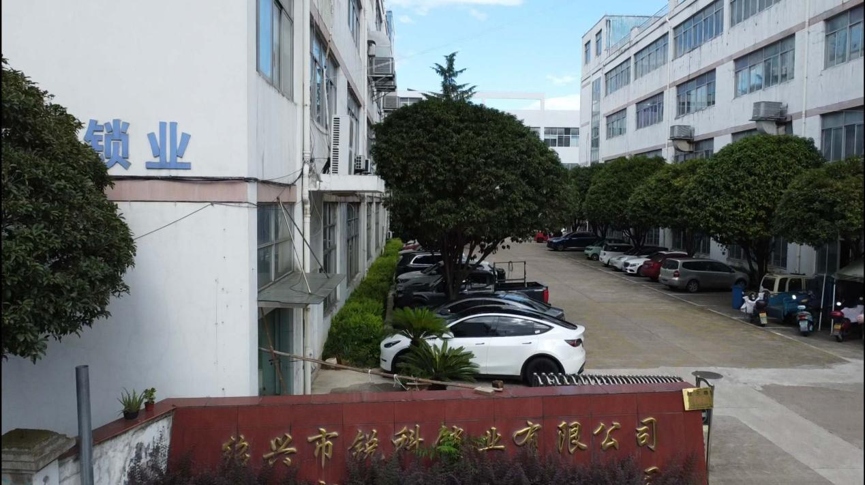
- Comprehensive credentials: Factory located in Shengzhou, Zhejiang, covering approx. 5,000 m², recognized as a Zhejiang High-Tech Enterprise; holds ISO9001, material test reports, RoHS, salt spray, waterproof, and classification society (ABS/DNV/LR/CCS) certifications.
Frequently Asked Questions
Q1: How large is the North American industrial lock market?
A: According to WiseGuy Reports, the global industrial lock market was valued at approximately USD 3.27 billion in 2024, with projections of USD 3.4 billion in 2025 and growth to USD 5.0 billion by 2035. The broader mechanical lock market was valued at about USD 12.68 billion globally in 2025 (source: Fortune Business Insights). North America accounts for 35–38% of the industrial lock market, making it the largest regional market worldwide.
Q2: What performance standards are required for North American cabinet locks?
A: The primary reference is ANSI/BHMA A156.11 (the dedicated standard for cabinet locks). Many projects require Grade 2 or higher. Our zinc alloy and stainless steel products are developed to this standard, and we can provide third-party test reports. Complete cabinets typically undergo UL50 / UL508A certification; the lock, as a component, is validated as part of the whole cabinet and generally does not require a separate UL listing.
Q3: Cabinets deployed in Florida’s coastal high-humidity environment – what lock material should be chosen?
A: SS316 stainless steel locks are recommended, with an IP rating of at least IP65, paired with weather-resistant sealing strips. SS316 contains molybdenum, offering superior salt-spray corrosion resistance compared to SS304, making it suitable for long-term coastal service. Die-cast zinc alloy is not recommended for high-salt-spray coastal environments.
Q4: Can your locks operate normally at -40°C?
A: Yes. Handle locks, rod control locks, and cylinder locks can be supplied with a special low-temperature grease version, with an operating range of -40°C to +80°C. Stainless steel has no low-temperature brittleness; zinc alloy is also suitable for low-temperature conditions. Products are validated through thermal cycling tests and are well-suited for Canada and the northern United States. In practice, we still recommend preventing ice and snow from directly entering the lock chamber.
Q5: Can you supply a complete hardware package for cabinets?
A: Yes. We provide a one-stop solution: locks + handles + hinges + sealing strips. All products in the same series maintain uniform material and surface finish (painting, plating, brushed/mirror stainless optional), reducing the cost of managing multiple suppliers.
Q6: What if we encounter installation dimension mismatches?
A: We support non-standard customization, including cutout diameter, bolt projection length, handle center distance, panel dimensions, etc. Customization is available for die-cast, stamped, and stainless steel parts. Simply provide 2D/3D drawings for a custom evaluation; MOQ is flexible.
Q7: Can we get samples for testing?
A: For customers with clear project intent, samples can be provided for on-site testing. Please contact sales with details of your testing conditions and intended material.
Q8: Is Reaking a trading company or a manufacturer?
A: We are a source factory (Shengzhou Ruike), owning our own die-casting, stamping, and stainless steel processing lines. We supply directly from the factory with no middleman markup, ensuring quality and delivery reliability. We welcome you to visit our factory in Shengzhou, Zhejiang. The facility spans approx. 5,000 m², is recognized as a Zhejiang High-Tech Enterprise, and holds ISO9001, material test reports, RoHS, salt spray, waterproof, and classification society certifications.
Q9: What is the lead time for bulk orders?
A: Standard models: 15–25 days. Non-standard custom orders: lead time depends on material and specific requirements. For the North American market, we can also assist with shipping and customs clearance logistics planning.
For product catalogs and technical drawings, please contact our sales team: sales@reaking.tech