
Technical Guides
Cam Lock Sizes: 16mm, 19mm & 22mm Selection Guide
Why Cam Lock Size Is the First Thing to Get Right
A cam lock only fits when three measurements line up: the body diameter, the GH length (lock body height), and the cam length. Get any one of them wrong and the lock either will not fit through the hole, will not clamp onto the panel, or the cam will not reach the frame to actually lock the door.
The most common cam lock sizes fall into three body diameters — 16 mm, 19 mm and 22 mm — which between them cover the vast majority of cabinets, drawers, enclosures and mailboxes. This guide explains each size, how to measure your existing hole and panel, and how to avoid the sizing mistakes that cause most re-orders.
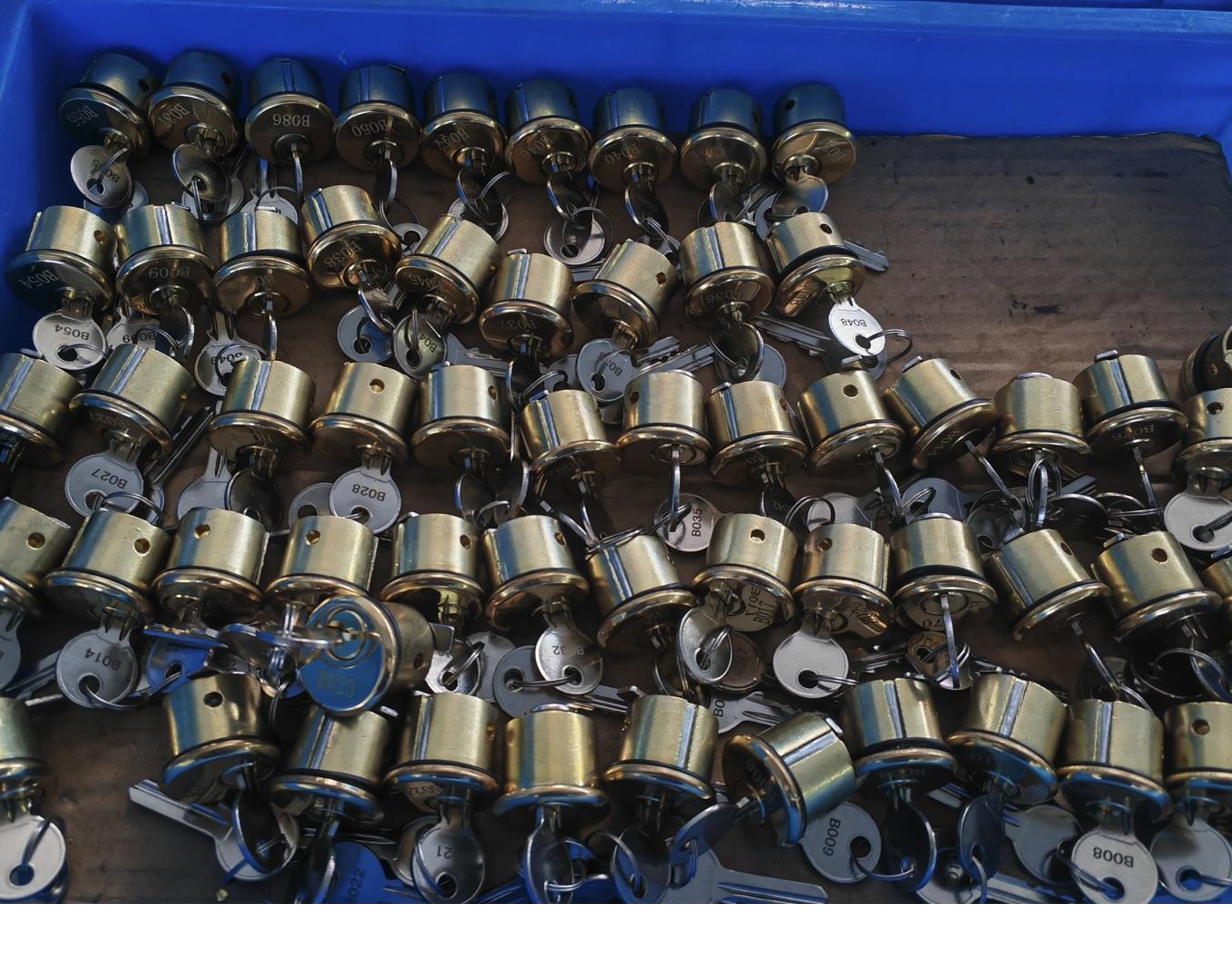
Lock Body Diameter: 16 mm vs 19 mm vs 22 mm
The body diameter is the size of the round hole you drill in the door or panel. It is the dimension that decides whether the lock fits at all, so it is always the starting point.
- 16 mm — the small size. Used on lightweight furniture, thin sheet-metal drawers, file cabinets and mailboxes where a discreet face is wanted. The smaller barrel means a lighter-duty lock.
- 19 mm — the all-rounder. The most widely specified size for general industrial cabinets, control panels and office furniture. It balances strength against a compact face.
- 22 mm — the heavy-duty size. Standard for electrical distribution cabinets, telecom cabinets and equipment enclosures where a larger barrel, a bigger keyway and higher torque matter. Most of the Reaking cylinder lock range is built on the 22 mm body.
Many cam locks are also made with a double-D or keyed body (two flats on the barrel) so the lock cannot rotate once the nut is tightened — check whether your existing hole is round or double-D before ordering.
GH Length: Matching the Lock Body to Your Panel Thickness
The GH length (lock body height) is the distance the body reaches through the panel. It must be slightly greater than your panel thickness (TS) so the retaining nut threads on with the cam sitting at the right depth behind the door. On a standard cam lock the GH is measured from the outside face of the panel to the base of the body, and it is the number you quote when ordering alongside the diameter.
Choosing a GH that is too short means the nut will not engage; too long and the body sticks out at the back, interfering with the frame. Always give the panel thickness, and select the GH one step above it, leaving room for any gasket or sealing washer.
Cam Length and Offset
The cam is the flat or bent arm on the back of the lock that swings behind the frame to hold the door shut. It must reach from the back of the lock body to the frame edge. Straight cams suit flush frames; offset or bent cams are used where the frame sits at a different depth from the door. A cam that is too short will not engage, and one that is too long will jam.
How to Measure for a Replacement Cam Lock
- Measure the hole diameter — the round opening in the panel, in millimetres. This sets your 16 / 19 / 22 mm body size.
- Measure the panel thickness — the material the lock passes through. This sets your GH length.
- Measure the cam length — from the back of the body to the frame edge, and note whether it is straight or offset.
- Note the rotation — 90° (quarter-turn) or 180° (half-turn), and which direction locks.
- Note the key type — wing, triangular, square, hexagon or another drive. See our cam lock insert types guide for the full list.
Common Sizing Mistakes
- Quoting only the diameter and forgetting the GH length — the single most frequent cause of a wrong order.
- Measuring the bezel, not the barrel — the visible face is wider than the body that goes through the hole.
- Ignoring the gasket — a sealing washer adds thickness, so the GH must be one step longer on IP-rated outdoor locks.
- Ordering a round body for a double-D hole — the lock will spin in the panel.
Frequently Asked Questions
What is the most common cam lock size?
19 mm is the most common all-round diameter, while 22 mm is the standard for industrial electrical and telecom cabinets. 16 mm is used mainly on furniture and light sheet-metal work.
How do I know what cam lock size I need?
Measure the existing hole diameter, the panel thickness, and the cam length from the body to the frame. Those three numbers together define the lock — the diameter sets 16 / 19 / 22 mm, and the panel thickness sets the GH length.
What does GH mean on a cam lock?
GH is the lock body height — the length of the barrel that passes through the panel. It must be slightly greater than the panel thickness (TS) so the retaining nut threads on correctly.
Are 22 mm cam locks stronger than 16 mm?
Yes. The larger 22 mm barrel allows a bigger keyway, a larger cam and higher torque, which is why it is the standard for industrial cabinets and equipment enclosures.
Can I use a cam lock for an outdoor cabinet?
Yes. Choose a sealed version with a gasket (typically IP54) and a corrosion-resistant finish such as stainless steel or powder-coated zinc alloy — see our guide to choosing cabinet locks for outdoor enclosures.
About Reaking
Reaking manufactures industrial cabinet hardware in Shengzhou, Zhejiang, China. Our main products include industrial cabinet locks (cylinder locks, panel locks, RV locks, plane locks, rod control locks), handles, hinges and sealing strips. We supply hardware for industrial enclosures, telecom cabinets, data center cabinets, energy storage cabinets and RV applications. We serve buyers across Europe, North America, Middle East and Southeast Asia. OEM and custom orders are welcome.
