
Industrial Enclosure Hardware for Belt & Road Infrastructure Projects
The Belt and Road Initiative isn’t a concept anymore — it’s a construction pipeline. In 2025, total BRI project commitments hit a record USD 213.5 billion, up roughly 75% year-on-year. The first half of 2026 added another USD 126.4 billion — the strongest H1 on record.
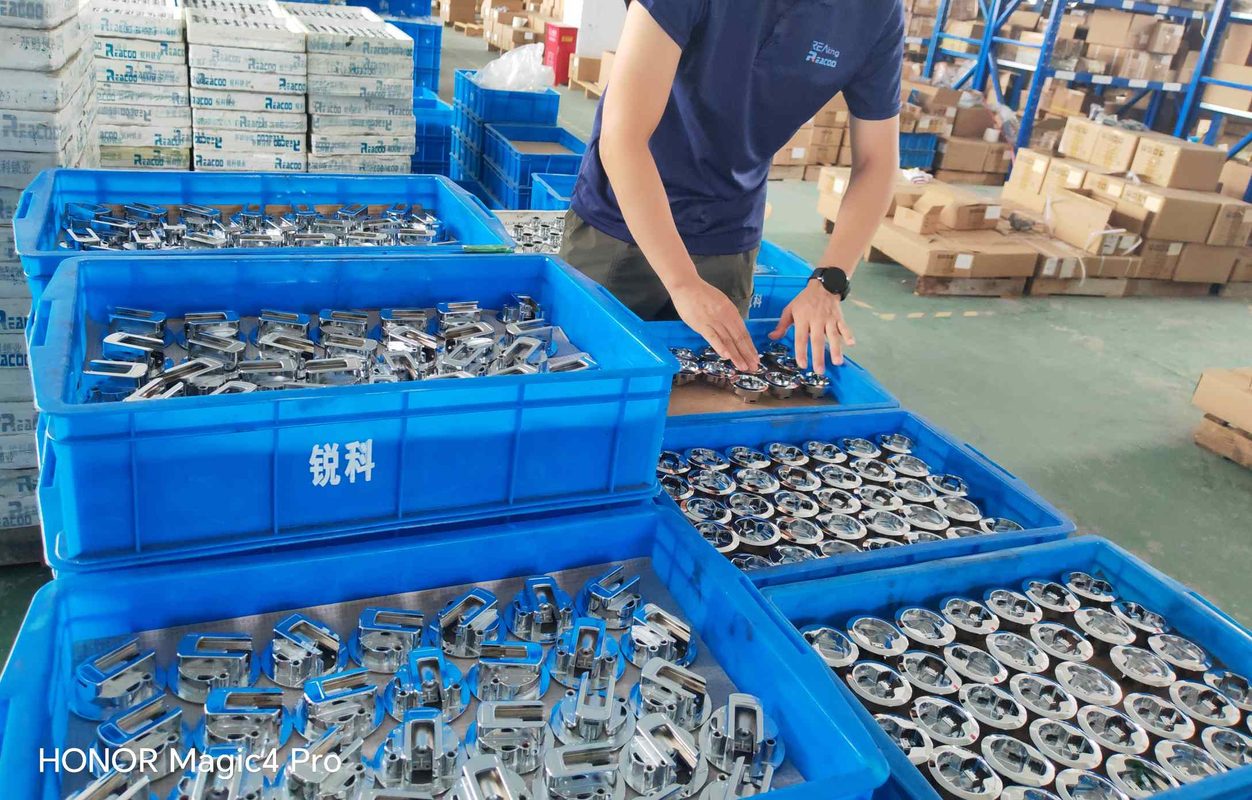
For industrial lock and enclosure hardware buyers, that translates to one thing: orders. Energy projects, data centers, telecom base stations, railways — every sector is buying cabinets, and every cabinet needs locks, hinges and gaskets that won’t fail on site.
But here’s the part that gets procurement teams into trouble: BRI projects aren’t in one place. They’re spread across 150+ countries, from -30°C Central Asian winters to 50°C+ Middle Eastern summers, from Southeast Asian humidity to African dust. The certification rules change every border you cross. Pick the right lock and the cabinet passes acceptance. Pick wrong and you’re looking at site rework, claims, and a customer who won’t call again.
This guide breaks down what BRI projects actually need, region by region, certification by certification.
What’s Driving BRI Hardware Demand
1. Energy and storage — the biggest slice
Energy is 43% of all BRI investment. In 2025, energy-related commitments reached USD 93.9 billion — more than double 2024. About USD 18 billion of that went into wind and solar.
The project names tell you the scale: Turkistan 300 MW solar + storage in Kazakhstan (USD 307 million), Karaganda 500 MW wind + storage (USD 573 million), Tashkent 200 MW solar + 500 MWh storage in Uzbekistan — the largest electrochemical storage project in Central Asia.
What does that mean for locks? A single storage project needs dozens to over a hundred cabinets — PCS conversion units, battery management cabinets, distribution units. Large volumes, standardised specs, and a supplier that can actually deliver on time.
2. Data centers and telecom — digital infrastructure is the new BRI
High-tech investment hit USD 28.7 billion, concentrated in data centers, EV batteries and hydrogen. FiberHome’s Thailand optical cable plant is online. China Mobile is pushing compute-plus-network-plus-5G infrastructure across Central Asia.
Data center cabinets need clean finishes and 20,000+ cycle mechanical life. Telecom cabinets are out in the open — towers, rooftops, remote sites — where maintenance is expensive and weather resistance isn’t optional.
3. Transport and power — the steady baseline
Africa construction contracts grew 283% in 2025. The China-Kyrgyzstan-Uzbekistan railway, China-Laos railway, and 28 China-Africa infrastructure agreements keep moving. Railways and power grids mean outdoor cabinets strung across hundreds of kilometres — dispersed equipment, long maintenance intervals, zero tolerance for failure.
Regional Conditions — One Size Does Not Fit All
Central Asia (Kazakhstan, Uzbekistan, etc.)
Continental climate. Summer above 40°C, winter down to -30°C, daily swings that fatigue seals and metal. Spec low-temperature grease (down to -40°C), stainless steel (no low-temperature brittleness), and products validated through -40°C to +80°C thermal cycling.
Middle East (Saudi Arabia, UAE, etc.)
50°C+ summer heat, intense UV, and Persian Gulf/Red Sea salt spray that’s more aggressive than typical coastlines. High-temperature grease, UV-resistant EPDM seals, IP55–IP65, and 316 stainless for coastal outdoor. [Link to Middle East page for deep dive.]
Southeast Asia (Laos, Vietnam, Cambodia, etc.)
Tropical heat, high humidity, coastal salt spray. Corrosion resistance is the priority — 304/316 stainless with EPDM seals for outdoor, zinc alloy for indoor. [Link to SEA page for deep dive.]
Africa (Nigeria, Kenya, Ethiopia, etc.)
Inland dry heat, coastal salt spray, and budgets that matter. Zinc alloy for indoor to control cost; stainless for coastal outdoor. The fastest-growing BRI region — 283% contract growth in 2025.
Certification Requirements — What Actually Applies
| Certification | Region | Applies To | Key Notes |
| EAC | EAEU (Russia, Kazakhstan, Belarus, Armenia, Kyrgyzstan) | Complete equipment | Purely mechanical hardware imported separately does NOT require EAC. When built into complete equipment, supplier provides technical docs. CE is NOT recognised by EAEU. |
| G-Mark/SABER | GCC (Saudi, UAE, Kuwait, Qatar, Bahrain, Oman) | Complete electrical equipment | Mechanical hardware imported separately does not require certification. When part of complete cabinets, supplier provides docs for conformity assessment. |
| SONCAP/PVOC | Nigeria, Kenya, etc. | Whole equipment customs clearance | Provide material, IP and salt-spray test reports as registration supporting documentation. |
| CE Marking | International tenders | Reference standard | Not legally mandatory in BRI countries but commonly used as a technical qualification threshold. |
The key point buyers miss: certification applies to complete equipment, not components. Purely mechanical locks, hinges and gaskets imported separately don’t need EAC, G-Mark or SONCAP certificates. But when your hardware goes into a cabinet that’s exported as a complete unit, the cabinet manufacturer needs your documentation — material composition declarations, IP test reports (EN 60529), salt-spray reports (ASTM B117), RoHS declarations — to clear customs.
Reaking provides the full documentation package so your customer’s certification filing doesn’t get held up.
Industrial-Grade Mechanical Lock Applications
| Application | Typical Cabinets | Lock Requirements | Recommended Material |
| Energy Storage | PCS conversion, battery management, distribution cabinets | Heavy-duty multi-point rod locking, weather-resistant seals, batch consistency | Zinc alloy / 304 stainless |
| Data Centers | Server cabinets, network cabinets | Fine surface finish, 20,000+ cycle life, optional door-position switch | Zinc alloy / 304 stainless |
| Telecom Base Stations | Outdoor telecom cabinets, distribution cabinets | Maintenance-free, weather-resistant, corrosion-proof, IP-rated | 304/316 stainless |
| Transport & Power | Signal cabinets, outdoor distribution cabinets | Corrosion-resistant, weatherproof seals, reliable long-term outdoor operation | 304/316 stainless |
| Industrial Control | Control cabinets, distribution boxes | High reliability, smooth operation, dustproof and waterproof | Zinc alloy / 304 stainless |
| Access Panels / Small Enclosures | Junction boxes, inspection doors, small distribution boxes | Compression latch (toggle), quick open/close, holds closed under vibration | Zinc alloy / 304 stainless |
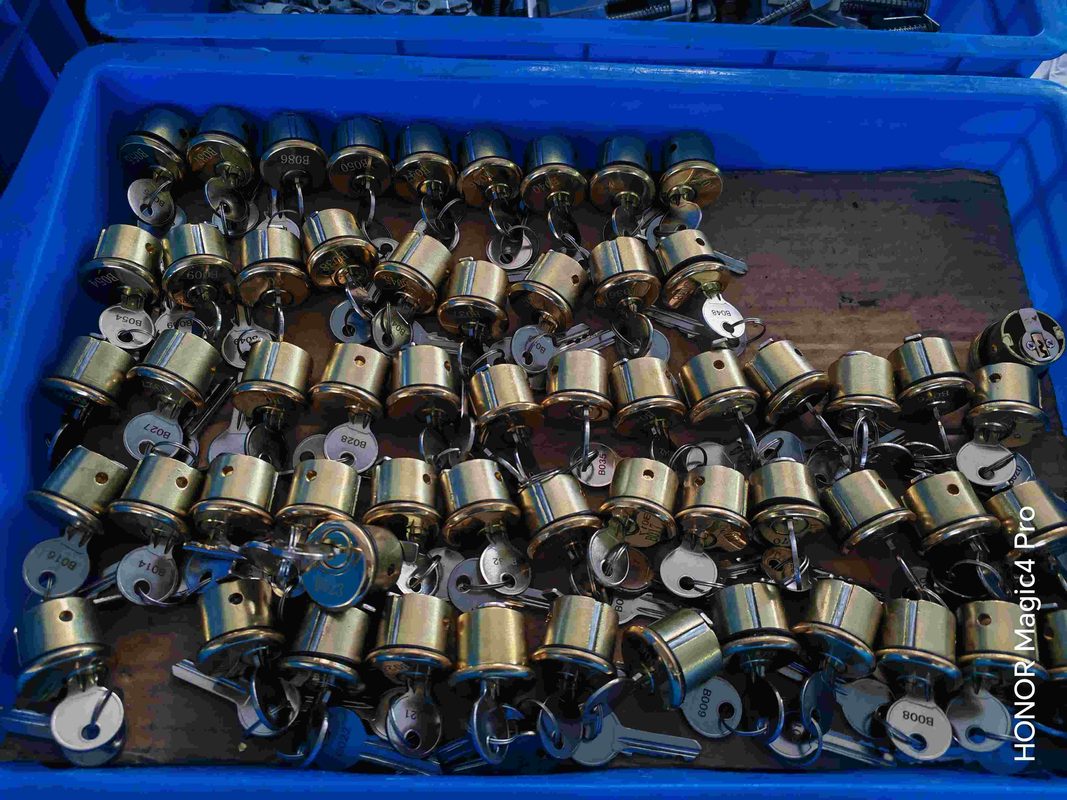
Mechanical locks dominate BRI procurement for a simple reason: they don’t need power and they don’t need a network. Handle cam locks, rod control locks, panel locks, cylinder locks and compression latches cover 90% of cabinet applications. Storage and power projects use heavy-duty multi-point rod locking. Data centers add door-position switch contacts for monitoring. Remote telecom sites need maintenance-free operation above all.
Four Pain Points in BRI Procurement
BRI overseas projects aren’t like domestic orders. Procurement teams consistently hit the same four walls:
-
- Fragmented certification — EAC for EAEU, G-Mark/SABER for GCC, SONCAP/PVOC for Africa. CE isn’t accepted everywhere.
-
- Tight schedules, big batches — EPC timelines are compressed. A single late shipment delays cabinet assembly and project milestones.
-
- No universal product — Central Asian cold, Middle Eastern heat, Southeast Asian humidity — one lock can’t cover all of it.
-
- Documentation gaps — Missing material or test reports hold up customs clearance for the whole shipment.
The supplier evaluation criteria below address exactly these four problems.
How to Evaluate a Lock Supplier for BRI Projects
Can they differentiate by region? Central Asia needs low-temp grease. Middle East needs high-temp grease. Southeast Asian coasts need stainless. A supplier that offers one product for everything is a supplier that will cause field failures.
Can they deliver complete documentation? Material composition declarations, IP reports, salt-spray reports, RoHS declarations — available before shipment, not after three follow-up emails.
Can they handle volume on schedule? Storage and telecom orders run into hundreds of sets. Factory-direct suppliers control their own capacity; trading companies don’t.
Can they supply locks, hinges and seals together? Single-source procurement means consistent materials and finishes, fewer suppliers to manage, fewer compatibility issues.
Can they customise? Non-standard cutouts, specific latch projections, custom finishes — BRI projects have specific requirements. Flexibility matters.
Why Choose Reaking
-
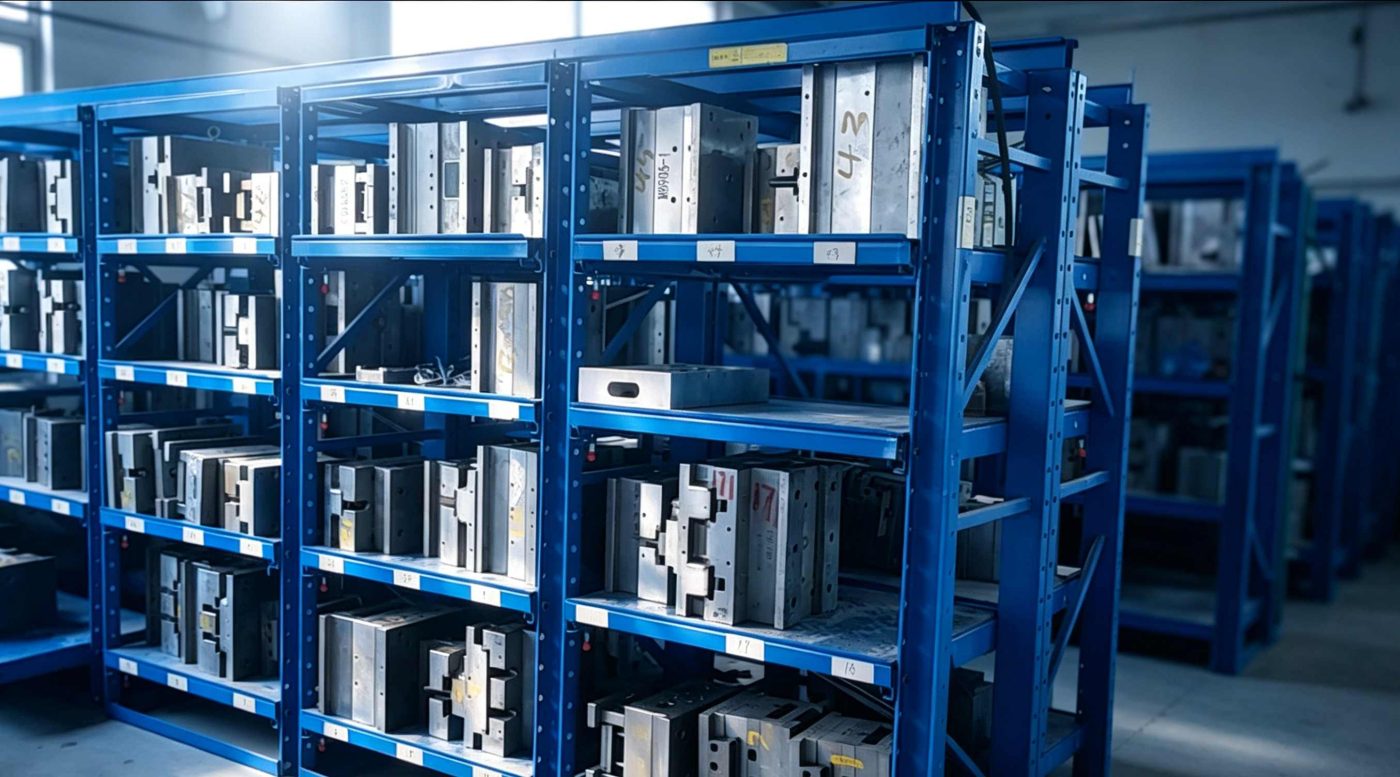
- Factory-direct. Die-casting, stamping, stainless processing and packaging all in-house in Shengzhou. Over a thousand molds on the shelf. No trading company markup, no gap between engineering and production.
-
- Mechanical lock specialist. Handle cam locks, rod control locks, panel locks, cylinder locks, compression latches — full category coverage. Optional door-position switch contacts for smart monitoring.
-
- Tested across BRI conditions. Full range validated through -40°C to +80°C thermal cycling. Stainless versions pass 500+ hours of ASTM B117 salt-spray testing. High- and low-temperature grease options for every climate zone.
-
- Documentation ready. Material composition declarations, EN 60529 IP reports, ASTM B117 salt-spray reports, RoHS declarations — supporting EAC, G-Mark, SONCAP and CE filings.
-
- One-stop supply. Locks, handles, hinges and gaskets from one PO, consistent materials and finishes.
-
- Flexible customisation. Non-standard cutouts, bolt projections, finishes and materials — with MOQs that work for both mega-projects and smaller retrofit jobs.
-
- Delivery assurance. Standard products ship in 3–4 weeks. Large BRI project orders can be prioritised — talk to us early.
See our factory and company page for production capabilities. Common questions are on the FAQ page.
Questions BRI Procurement Teams Ask
Q: What lock types are most commonly purchased for BRI projects?
Primarily mechanical: handle cam locks, rod control locks, panel locks, cylinder locks, and compression latches for access panels. Energy storage and power projects use heavy-duty multi-point rod locking systems. Data center projects add door-position switch contacts for monitoring.
Q: Do I need EAC certificates for lock components exported to EAEU countries?
No. EAC applies to complete electrical equipment. Purely mechanical hardware imported separately doesn’t require EAC. When exported as part of complete equipment, the equipment manufacturer handles EAC and the component supplier provides technical documentation. Important: CE is not recognised by the EAEU.
Q: Do mechanical locks need G-Mark for GCC countries?
No. G-Mark applies only to complete low-voltage electrical equipment. When hardware goes into complete cabinets, the cabinet needs G-Mark and the supplier provides documentation for the assessment.
Q: What about SONCAP/PVOC for African countries?
Same principle. Mechanical hardware imported separately doesn’t need the certificate. When part of complete equipment, the equipment follows SONCAP/PVOC requirements and we provide supporting documentation — material, IP and salt-spray reports.
Q: What do you specify for Central Asian extreme cold?
Low-temperature grease, products validated through -40°C to +80°C thermal cycling. Stainless steel has no low-temperature brittleness, making it more reliable than zinc alloy in extreme cold.
Q: How do you handle Southeast Asian coastal salt spray?
304 or 316 stainless steel with heavy-duty anti-corrosion surface treatment, paired with EPDM seals to block moisture and salt spray ingress.
Q: Can you provide complete technical documentation?
Yes. Material composition declarations, EN 60529 IP test reports, ASTM B117 salt-spray reports, and RoHS compliance declarations — available before shipment.
Q: What are lead times and do you offer samples?
Standard products ship in 3–4 weeks. Large BRI orders can be prioritised. Sample support for engineering projects is available — contact our sales team with project details.
Get Reliable Industrial Locks for Your BRI Project
Whether your project is in Central Asia needing cold-resistant locks, the Middle East needing heat and salt-spray resistance, or Southeast Asia needing corrosion-proof hardware — tell us your target market and operating conditions. We’ll give you material recommendations, certification documentation, a quotation and sample support. We reply to every inquiry within 24 hours.
[CTA Button: Get a Quote]Email: sales@reaking.techOther Regional Solutions
-
- Solutions for European Market — CE, RoHS, ATEX, Nordic cold, Mediterranean salt spray
-
- Solutions for North America Market — ANSI/BHMA Grade 2, UL50/UL508A
-
- https://www.reaking.tech/market-europeSolutions for Middle East Market — 50°C+ desert heat, Persian Gulf salt spray, G-Mark/SABER
-
- Solutions for Southeast Asia Market — tropical humidity, monsoon rain, high-temperature corrosion